This post contains affiliate links. Please see our disclosure policy.
These Boursin chicken meatballs with creamy orzo are tender, cheesy, and packed with flavor. The chicken meatballs are seasoned with garlic, paprika, Italian seasoning, and Boursin cheese, then served over creamy orzo with spinach, Parmesan, and a little fresh lemon.
Love ground chicken recipes? Check out these honey buffalo chicken meatballs and chicken lettuce wraps!
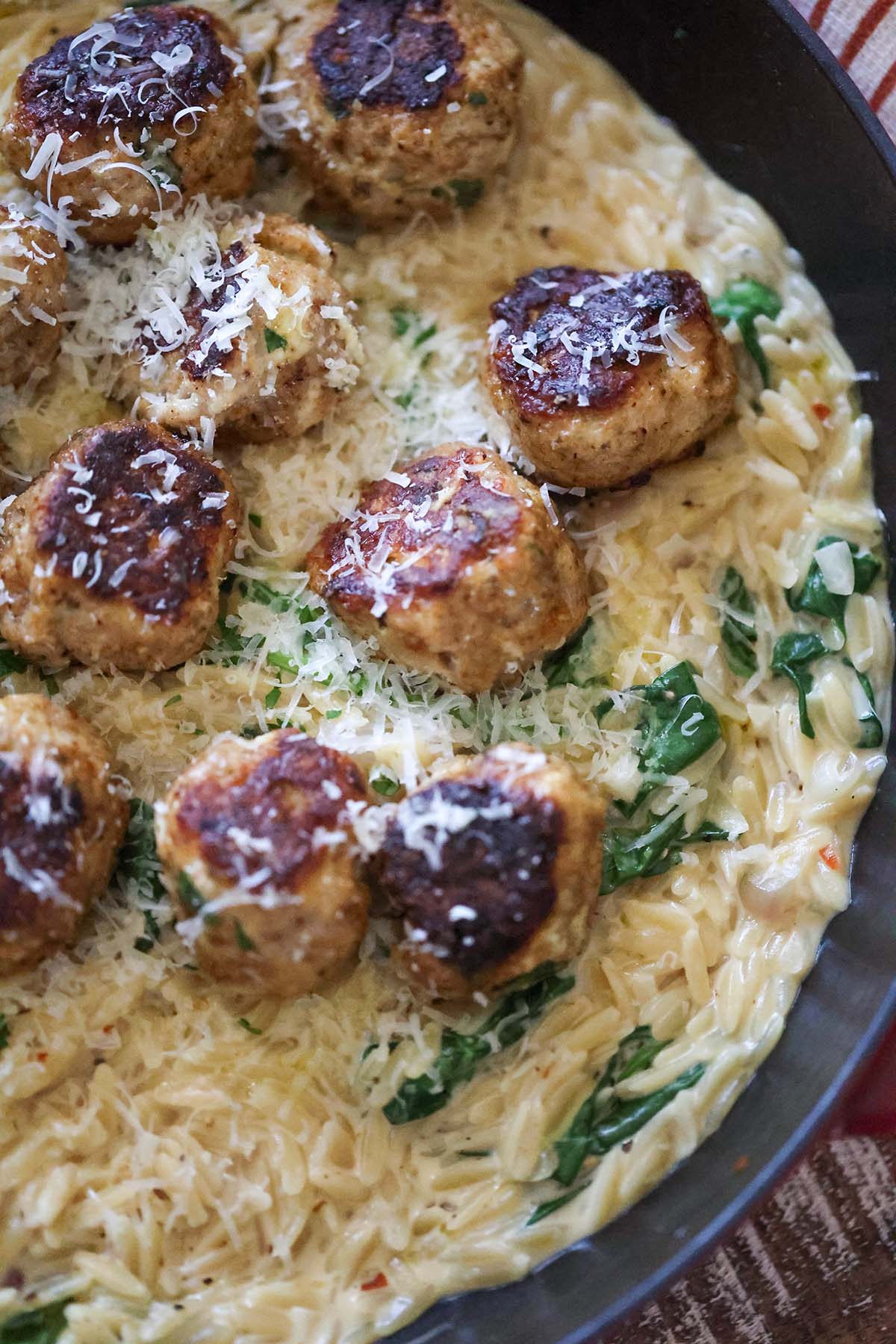
Table of Contents
I made these Boursin chicken meatballs for girls’ night, and everyone absolutely loved them! My friends immediately told me I had to post the recipe on my blog, so of course I had to share it.
Why You’ll Love This Recipe
- The Boursin keeps the chicken meatballs flavorful and tender and adds SO MUCH flavor!
- The creamy orzo cooks in under 25 minutes.
- Spinach adds a nice pop of color and sneaks some veggies into the dish, too!
- It’s a complete meal, so you really don’t need to serve much alongside it.
- It’s perfect for a weeknight dinner but nice enough to serve to guests.
Ingredient Notes
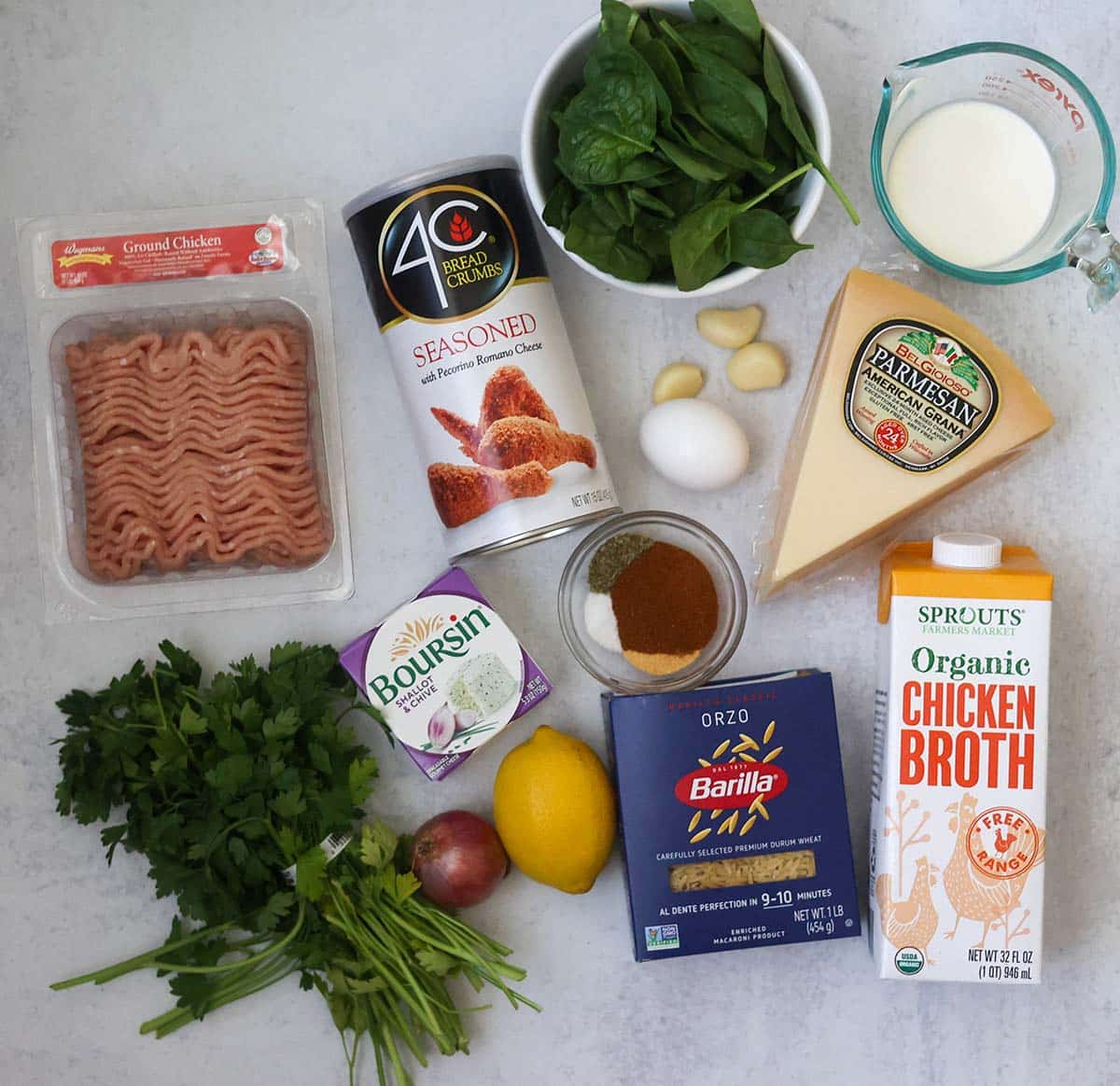
See the recipe card below for ingredient quantities and complete instructions.
- Boursin Cheese – I highly recommend Boursin cheese but if you don’t have it on hand, goat cheese works too.
- Ground Chicken – Ground chicken is very lean, so ingredients like egg, breadcrumbs, and Boursin help keep the meatballs moist and tender.
- Kosher Salt – I normally use about 1 teaspoon of salt per pound of ground meat, but I use only 3/4 teaspoon here because Boursin is already seasoned and salty. You can always add more salt to the finished dish if needed.
- Parmesan – Freshly grated Parmesan melts much better than pre-shredded cheese and gives the orzo a smoother consistency.
- Lemon – Don’t skip it! A squeeze of fresh lemon at the end cuts through the richness of the Boursin, cream, and Parmesan.
Top Tips
- Don’t overwork the meatball mixture. Ground chicken is lean, and excessive mixing can make the meatballs tougher instead of tender.
- Keep an eye on the orzo while it cooks. It can stick to the bottom of the skillet, so stir it fairly often and add additional broth if necessary.
- Wait until the orzo is cooked before adding the heavy cream and cheeses. This keeps the sauce creamy and helps prevent it from becoming overly thick while the pasta cooks.
- Taste before adding additional salt. Between the Boursin, Parmesan, and chicken broth, there is already quite a bit of seasoning in the dish.
- The orzo will continue to thicken as it sits. If you’re not serving it immediately, stir in a splash of broth or cream before serving.
- I recommend cooking the meatballs first and then cooking the orzo.
FAQs
Can I bake the chicken meatballs instead?
Yes. Place the meatballs on a lined or lightly greased baking sheet and bake at 400°F until they reach an internal temperature of 165°F. Depending on their size, they should take approximately 15–20 minutes.
Can I use ground turkey instead of ground chicken?
Absolutely. Ground turkey works well here, although I recommend using a ground turkey that isn’t extremely lean so the meatballs stay juicy.
Why is my orzo too thick?
Orzo continues absorbing liquid even after you remove it from the heat. Simply stir in a splash of chicken broth or heavy cream until it reaches your preferred consistency.
Storage and Reheating
Allow leftovers to cool completely before transferring them to an airtight container. Refrigerate for up to 3–4 days.
The orzo will thicken considerably in the refrigerator. When reheating, add a splash of chicken broth, water, or heavy cream and heat gently until the orzo becomes creamy again.
Watch How I Make This Recipe…
Tried this recipe? Please leave a star ⭐️⭐️⭐️⭐️⭐️ rating in the recipe card below and/or a review in the comments section further down the page. Also, please consider following me on Facebook or Pinterest!
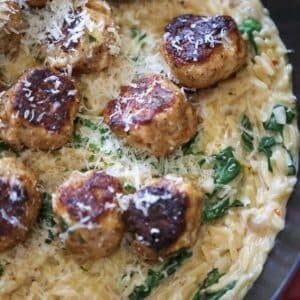
Boursin Chicken Meatballs with Orzo
Ingredients
For the Boursin Chicken Meatballs
- 1 lb ground chicken
- 1 5.2-ounce package Shallot & Chive Boursin cheese
- 1/2 cup breadcrumbs
- 1 large egg
- 2 garlic cloves, finely grated
- 2 tablespoons fresh parsley, finely chopped
- 1 teaspoon granulated garlic
- 2 teaspoons paprika
- 1 teaspoon Italian seasoning
- 1 teaspoon onion powder
- 3/4 teaspoon Kosher salt
- Black pepper, to taste
- Olive oil, for cooking
For the Creamy Orzo
- 1 cup dry orzo
- 2 1/2 cups chicken broth
- 1 shallot, finely diced
- 2 garlic cloves, finely minced
- 1 cup fresh spinach
- 1/2 cup heavy cream
- 1/2 cup freshly grated Parmesan cheese
- Juice of 1/2 lemon
- Salt and black pepper, to taste
Instructions
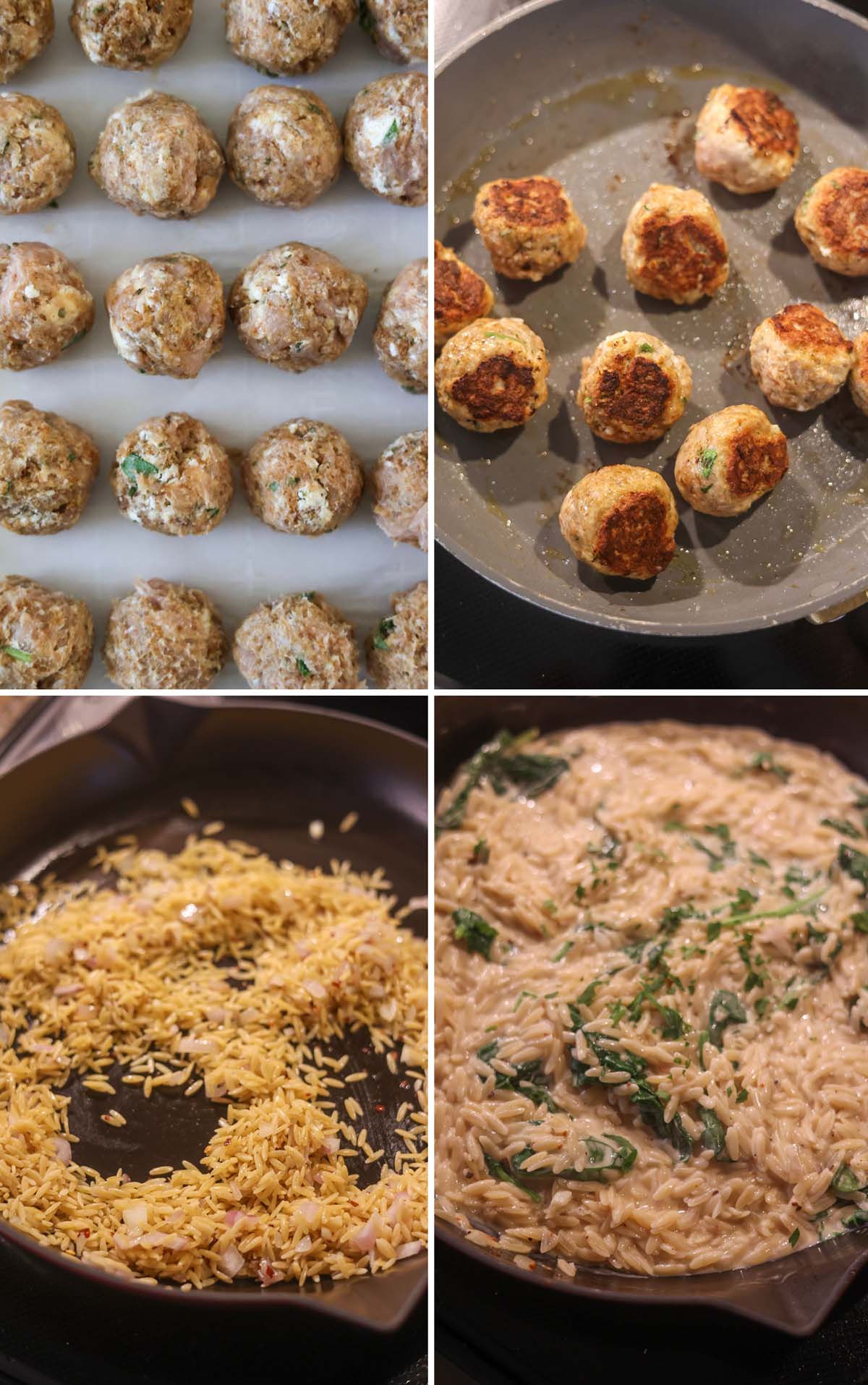
- Add the ground chicken, entire package of Boursin cheese, breadcrumbs, egg, grated garlic, parsley, granulated garlic, paprika, Italian seasoning, onion powder, salt, and black pepper to a large bowl. Mix until just combined, making sure not to overmix.
- Form the chicken mixture into evenly sized meatballs.
- Heat a little olive oil in a large skillet over medium heat. Add the meatballs and cook, turning occasionally, until browned on all sides and cooked through to an internal temperature of 165°F. It should take about 10 minutes. Remove the meatballs from the skillet and set them aside.
- Add the shallots to the same skillet and cook for 2–3 minutes or until softened. Add the minced garlic and cook for about 20 seconds or until fragrant.
- Stir in the dry orzo and cook for about 30 seconds, stirring frequently.
- Pour in the chicken broth and scrape up any browned bits from the bottom of the skillet. Bring to a simmer and cook, stirring frequently, until the orzo is tender and most of the liquid has been absorbed. Add a splash more broth if needed. This should take about 15-17 minutes.
- Reduce the heat to low and stir in the heavy cream, Parmesan cheese, and spinach. Cook until the Parmesan has melted and the spinach has wilted.
- Add fresh lemon juice to taste, then season with salt and black pepper as needed.
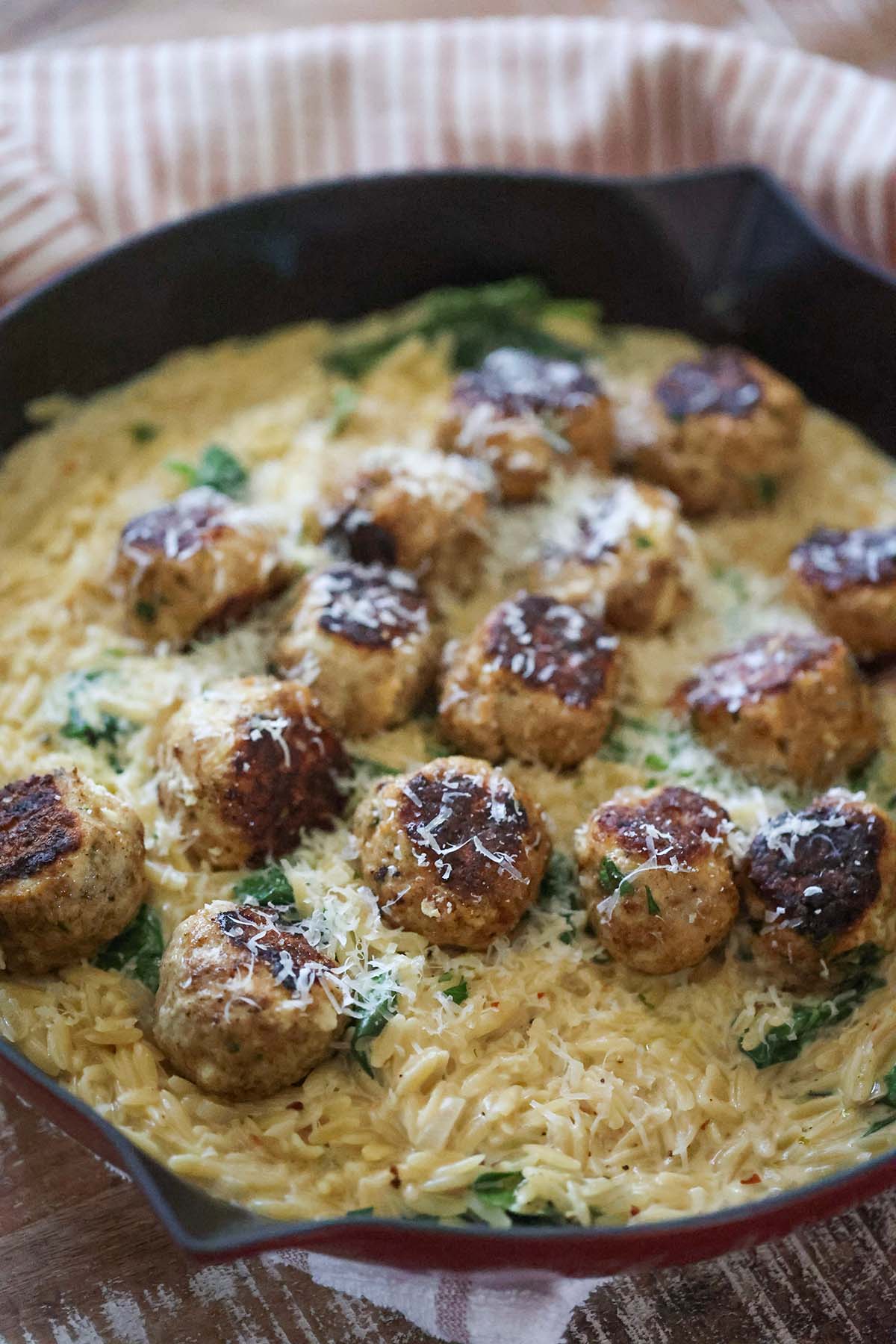
- Return the chicken meatballs to the skillet and cook for 1–2 minutes or until heated through. Serve immediately and garnish with extra Parmesan and fresh parsley, if desired.
Notes
Nutrition
Nutrition information is automatically calculated, so should only be used as an approximation.